

 Image 1 of 3
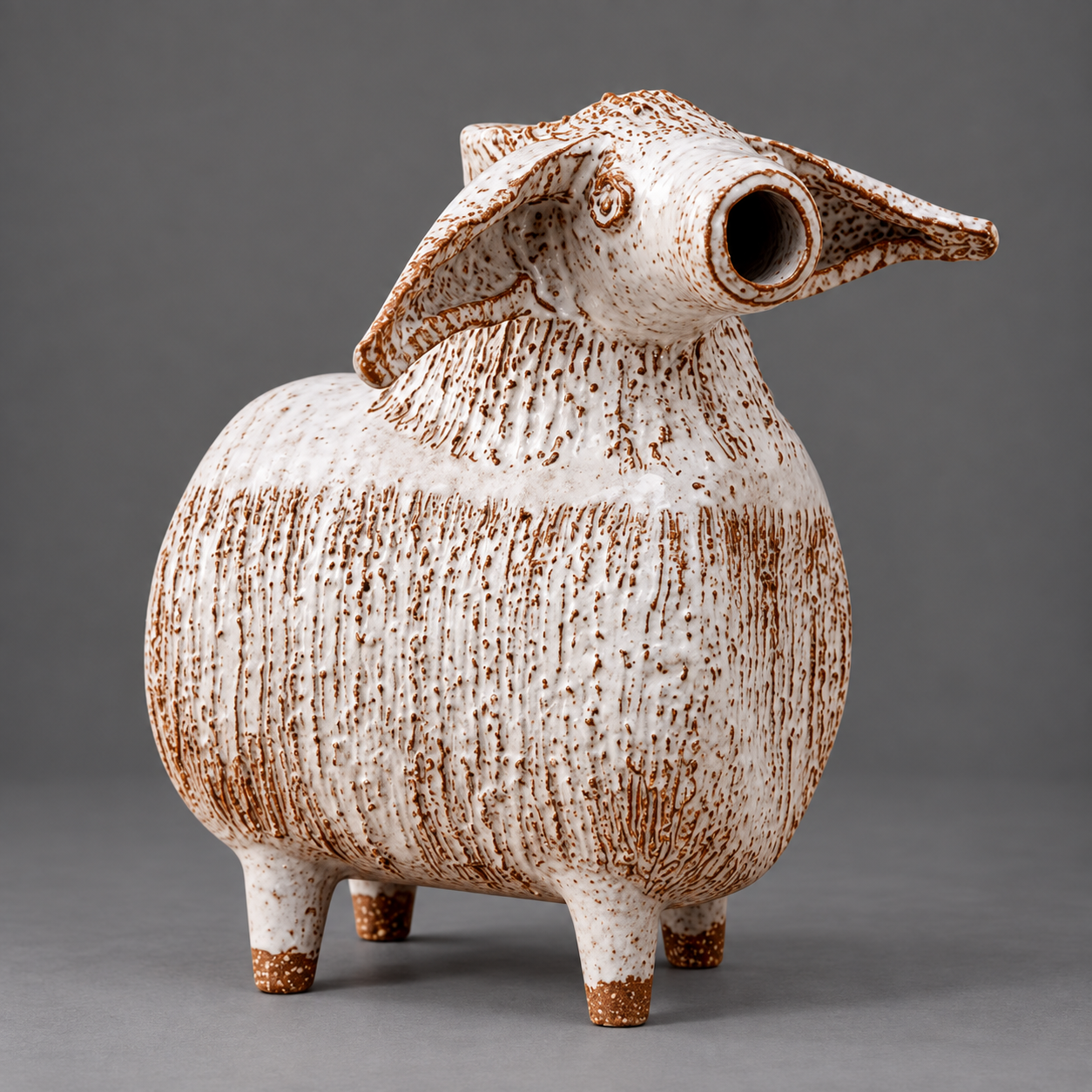 Image 2 of 3
 Image 3 of 3
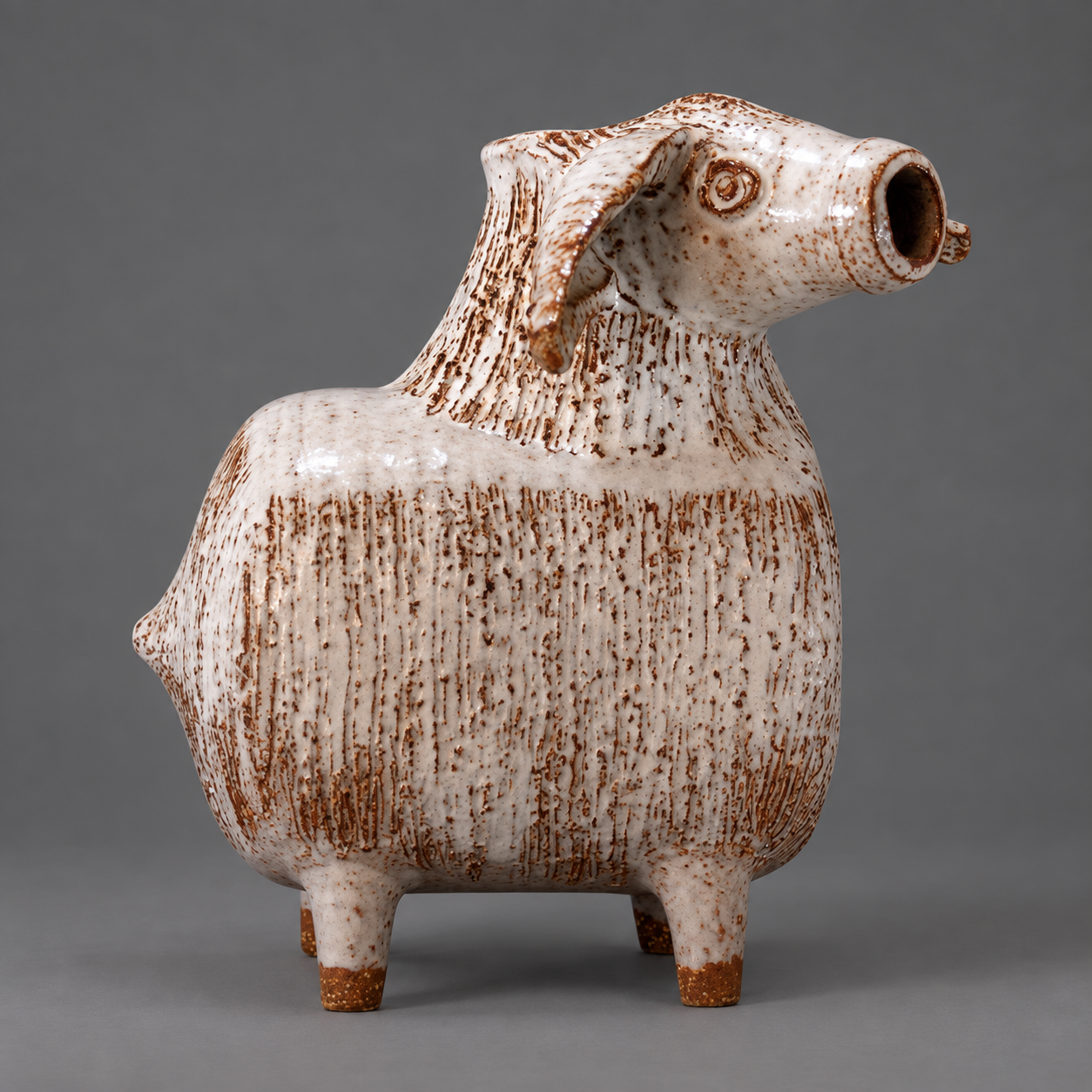
A stoneware sheep, roughly 20 cm nose to tail, built up in soft, rounded volumes with a spouted, slightly comic snout that doubles as a pouring lip — this was made to be used, not just looked at. The body is finished in a dry, sponge-textured white glaze over a warm brown clay body, so the color shows through unevenly in vertical streaks, like the sheep's own wool. Standing on four small unglazed feet, it has the kind of understated, slightly absurd charm that defines Scandinavian studio ceramics of the era — animals treated as sculptural exercises rather than sentimental figurines.
A stoneware sheep, roughly 20 cm nose to tail, built up in soft, rounded volumes with a spouted, slightly comic snout that doubles as a pouring lip — this was made to be used, not just looked at. The body is finished in a dry, sponge-textured white glaze over a warm brown clay body, so the color shows through unevenly in vertical streaks, like the sheep's own wool. Standing on four small unglazed feet, it has the kind of understated, slightly absurd charm that defines Scandinavian studio ceramics of the era — animals treated as sculptural exercises rather than sentimental figurines.